> クリエイティブ部へのメンバー募集はこちらから

  1. homeHome
  2. 望洋ヒストリー
  3. The historical background of the Boyo Community's place name , dating back to the time of the Nihon Shoki

The historical background of the Boyo Community's place name , dating back to the time of the Nihon Shoki

The historical background of the Boyo Community's place name , dating back to the time of the Nihon Shoki
文/Kawarake

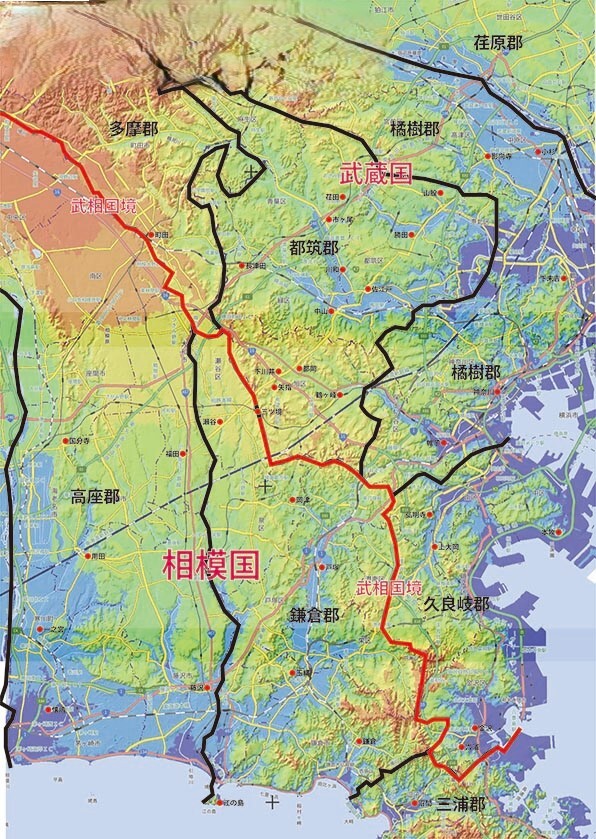
It seems that Sagami Province and Musashi Province were already located in the Kanto region in the time of the "Nihon Shoki". And most of Yokohama City, where we live today, actually belonged to Musashi Province (!). The Sakai River was the very border, and even today, its upper reaches form the border between Machida City and Kanagawa Prefecture.

Map provided by: Director Aizawa of Hasseiden Local History Museum


The area where the Boyo Jichikai is located was called "Kuraki District, Tairako District, Negishi Village." This is because after the Miura clan, who became familiar from the historical drama "The 13 Lords of Kamakura," was defeated by the Hojo clan of Odawara during the Sengoku period (early 16th century), the Hirako clan, a branch of the clan that had been in this area (around Isogo and Sugita), was allowed by the Hojo clan to govern the four villages of Honmoku, Negishi, Yokohama, and Ishikawa. However, perhaps because they were still worried about the threat of the Hojo clan, the Hirako clan later left this area, relying on the Uesugi clan of Echigo (Niigata), who had ties to the Miura clan. For this reason, it was called "Kuraki District, Negishi Village" for a long time after that. The name "Kuraki" still remains in "Kuraki Park" in Isogo Ward and the "Kuraki Bridge" over the Nakamura River.


The villagers mainly engaged in fishing, but perhaps because the shallow waters of Negishi Bay were not as good a fishing ground as those off the coast of Honmoku, they also went up the hill to cultivate fields during the off-season. On the other hand, the people on the hill also seemed to live a half-farming, half-fishing lifestyle, traveling between the hills and the beach, such as boarding the boats of the fishing bosses during the farming off-season. The roads they used to travel between the hills and the beach were Nanamagari, Nakamurazaka, and Fudozaka, which still exist today (I will touch on the background of these interactions in another post).


The Hasseiden Museum also has detailed exhibits about the tools and lifestyles of fishermen, so be sure to check it out.


In April 1901 (Meiji 34), Negishi Village was incorporated into Yokohama City and became "Negishi Town, Yokohama City." Then, on October 1, 1927 (Showa 2), with the creation of Naka Ward as part of the implementation of the ward system, it became "Negishi Town, Naka Ward, Yokohama City," and on April 1, 1933 (Showa 8), Negishi Town was further divided. At this time, the former "Negishi Town Aza Yaguchi," "Aza Ikebukuro," and "Aza Kaso" became "independent" from Negishi Town as Yaguchidai, Ikebukuro, and Negishi Kasodai, respectively.


Meanwhile, as the towns and villages within Kuragi County gradually became independent or were incorporated into Yokohama City, the county office was abolished in 1926 (Taisho 15), and the county itself was abolished in 1936 (Showa 11).


What did you all think? This time, I have provided a rough historical background of the area.

Request to everyone
In "Boyo History", we will be serializing the history of the area including the Boyo Neighborhood Association, the origin of the area's name, folk tales heard from our ancestors, local pride, etc. We hope you enjoy reading it, and if you have any questions or additional information, please feel free to let us know.
Additionally, if you have any old memories, experiences, stories, or old photos of this area, we would appreciate it if you could provide them (photos and other materials will be handled with care and returned promptly). If you are willing to write your own, please send us your manuscript.
Let's record and accumulate the history of our town, Boyo Neighborhood Association, together.

Kawarake

I will write this based on stories I have heard from former relatives and elders, as well as information I have gathered from interviews and researched in literature after launching my website. As I write, I would like to answer questions such as "I want you to tell me what this place used to be" and "Why is this place called ○○?", so please feel free to send me requests. Please send it to me. We would also like to thank Mr. and Mrs. Iikura of the Yokohama City Guide Association (residing in Negishi Kasodai) and Director Aizawa of the Yokohama City Hasseiden Local History Museum for their cooperation during their busy schedules. I would like to take this opportunity to express my deepest gratitude.


LINE Official Account Easily get the latest information by adding friends!

  • 回覧板などの
    暮らしの情報
  • 盆踊りなどの
    イベント情報
  • いいモノあげる
    出品情報
Limited to residents of Boyo Neighborhood Association!Become friends on LINE